Principle of Internal Combustion Engine
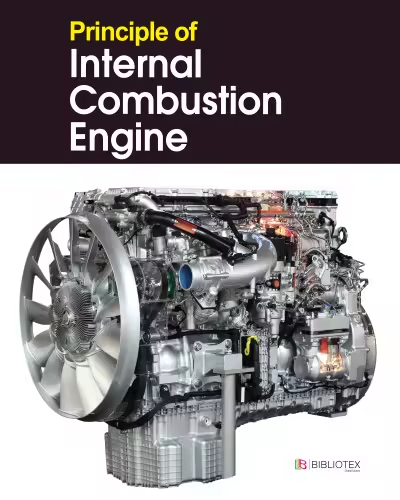
English | 2023 | ISBN : 1984678868 | 330 Pages | PDF | 34 MB
In the years since Watt improved the steam engine, the efficiency has greatly increased, and at the same time its application range has expanded. Human beings are liberated from heavy physical labor in many trades, entering the steam age from the human age, which improves social efficiency rapidly. As society develops and progresses, the steam engine, which represented the external combustion engine, can no longer meet the demand, so internal combustion engine technology emerges. Internal combustion engines improve their power and efficiency by burning fuel in their cylinder, so their technology has advanced rapidly as a result. The internal combustion engine has developed from the gas engine, gasoline engine, diesel engine, and gas turbine to the rotary engine. In addition to providing 25% of the world's power, internal combustion engines (ICs) emit about 10% of greenhouse gases (GHGs). For years, engine manufacturers and researchers have been working toward reducing fuel consumption and emissions. A number of technological advances have been made, making todays IC engine an absolute marvel. Recent emissions scandals have dealt a severe blow to the reputation of IC engines, threatening their ability to contribute significantly to reducing emissions in the transportation sector in the future. Consequently, there have been proposals to replace the IC engines in vehicles with electric drives in order to decrease GHG emissions and fuel consumption.
Quick check before we show the links
Helps us keep automated scrapers from hammering the filehosts.